Madrid
Spain’s capital has a history marked by being underestimated, a figure of fun. But it is beautiful and vibrant. This is a love letter to Madrid.

MADRID, Spain — Henry Inglis beat me to it. Born in Edinburgh in 1795, he chronicled his travels around the world, his most famous work, “Spain in 1830”. Scotland’s first travel writer, even without Substack.
Amidst a period when it was often characterized as a poor, second-rate city, Inglis found Madrid “bustling and alive, its streets full of elegant men and women1”. The Scots were always a generous type and I couldn’t agree with him more.


I’m finishing up Luke Stegemann’s book on Madrid now. It is the history of a city underestimated, denigrated and looked down upon by other European capitals. Chaotic and unruly, stereotypes of over-long siestas. History forgotten. Why couldn’t it just be more like Paris? But over a thousand years of history, change, brutal wars, artistic brilliance and genius of all kinds, Madrid has emerged as one of the most vibrant, important and wonderful cities in the world.
In his paean to the Madrilenos, Stegemann writes that for those who live here, it is “where life begins, takes daily shape and ends; a place of work, business, education and family…with its limitless present breadth and vanishing historical depth, that is Madrid.”
I’m in town to teach at the Universidad de Navarra for a few days and I love this city. Even if the temperatures in June are not meant for the Scots. How did Inglis pull it off in the days before sunscreen?
Yes, I’m teaching here as part of the University Reputation Leadership Program at the Universidad de Navarra. Almost 100 participants from 60 universities and 20 countries around the world. The reputation programming that Navarra puts on is some of the best around. That’s the reason they can bring together people from Chile, Luxembourg, the United States, the United Kingdom, Malawi, Australia, Argentina, more, as well as around Spain, for a week of excellent talks and events.
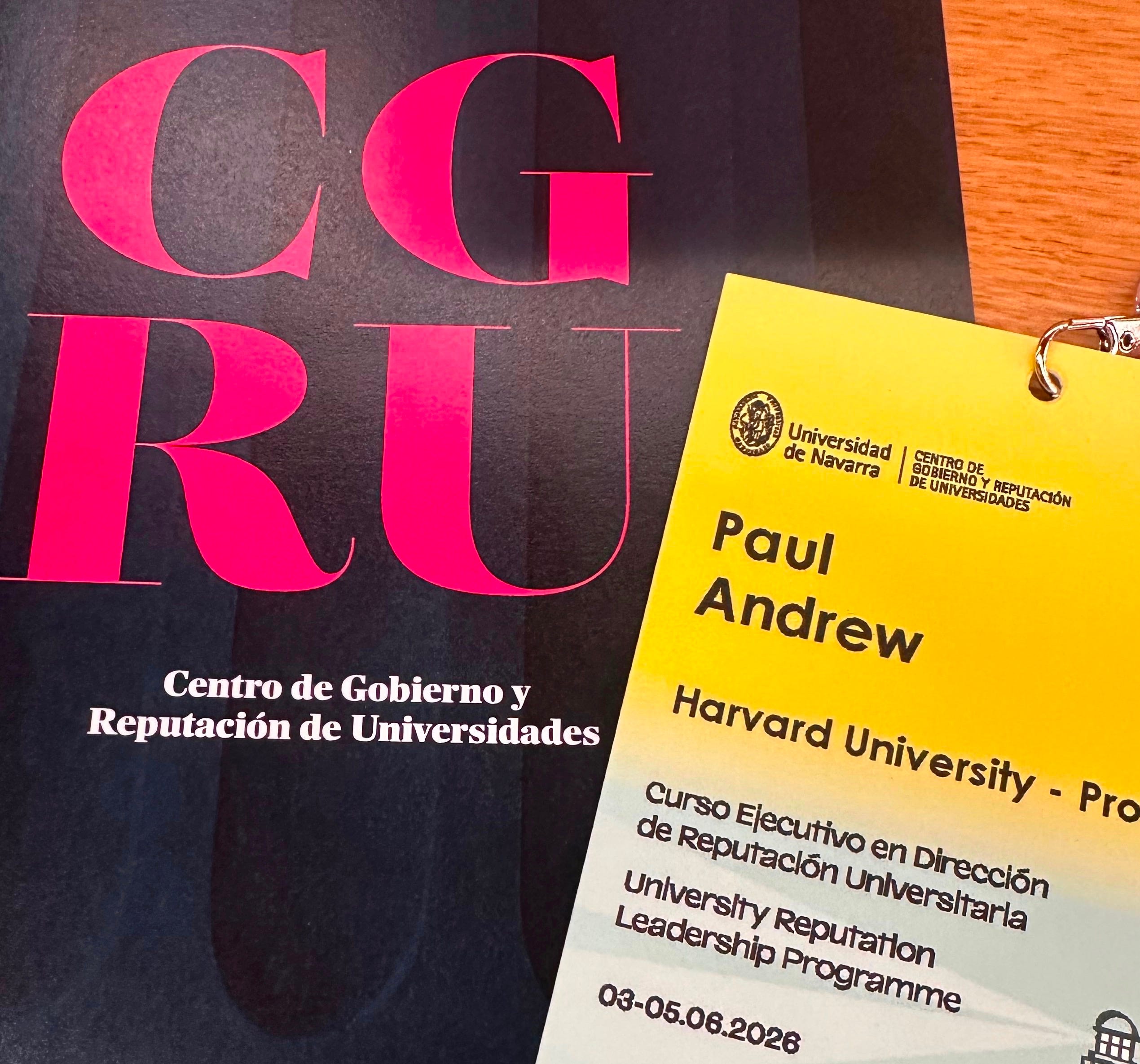
For me, it’s great professional development. It forces me to step back and think about my work, how we approach public affairs at Harvard, and to connect and learn from colleagues around the world. I first spoke at the University’s main campus in Pamplona in 2015 when the program started under the “Building University Reputation” name and have returned a few times since.
A lot has changed in those 10 years and the context for universities has only got more difficult. Financial pressures, a more polarized society, the rise of AI, geopolitical and immigration challenges, questions about the value of higher education. Managing university reputation has never been a more important calling. Or harder!
Spain is booming, almost an economic miracle at the moment. And while there are challenges on the horizon - a housing shortage, slowing population growth, all too familiar polarization - its capital bustles from early morning into the wee hours of the morning, seemingly always accompanied by a bright (blazing, it’s been near 90s every day) sun.


Madrid has its attractions. The Prado might be the finest art gallery in the world. El Retiro and Sabatini, stunning urban parks. The Mercado San Miguel is like a playground for anyone who loves great food and great atmosphere. Grand, imposing architecture. Tiny, winding cobblestone streets. Beautiful, welcoming people. And some of the best cuisine in Europe. Oh, and the Pope is coming Saturday - so add divine intervention to the list.
If you get the chance, go.
Thanks for joining along on the Summer Stack. Madrid has definitely felt like summer. Next we’re off to somewhere even hotter; last I checked it was 109 degrees in Phoenix, Arizona.
From Luke Stegemann’s excellent 2024 book, ‘Madrid’.